
Birthstone Crystal Bracelets vs. Beaded Gemstone Bracelets: Which to Choose?
Two bracelets can sit in the same jewelry box and do completely different jobs. A birthstone crystal bracelet is chosen for what it represents: a month, a person, a milestone. A beaded gemstone bracelet is chosen for how it looks and feels: color, rhythm, texture, stackability. Neither is the “better” choice. The right one depends on whether you want a piece with a private story or a piece that finishes an outfit—and on how hard you plan to wear it.
Purpose: A Private Anchor or a Visible Accent
Birthstone bracelets are usually built around one stone or a small group of stones tied to a birth month. The design tends to be restrained: a single faceted gem, a row of tiny rounds, a charm, or a stone set in metal. That restraint is the point. It lets the bracelet act as a personal anchor without announcing itself across the room. An October birthstone bracelet may use opal or tourmaline, depending on which birthstone list the jeweler follows; a March one may lean aquamarine or bloodstone. The variation is normal, and it is worth checking the chart before you buy a gift. January may mean garnet, February amethyst, April clear quartz or diamond, June moonstone or pearl, and September sapphire or lapis. Some jewelers blend traditional and modern lists, so confirm the specific stone rather than assuming the month tells the whole story.
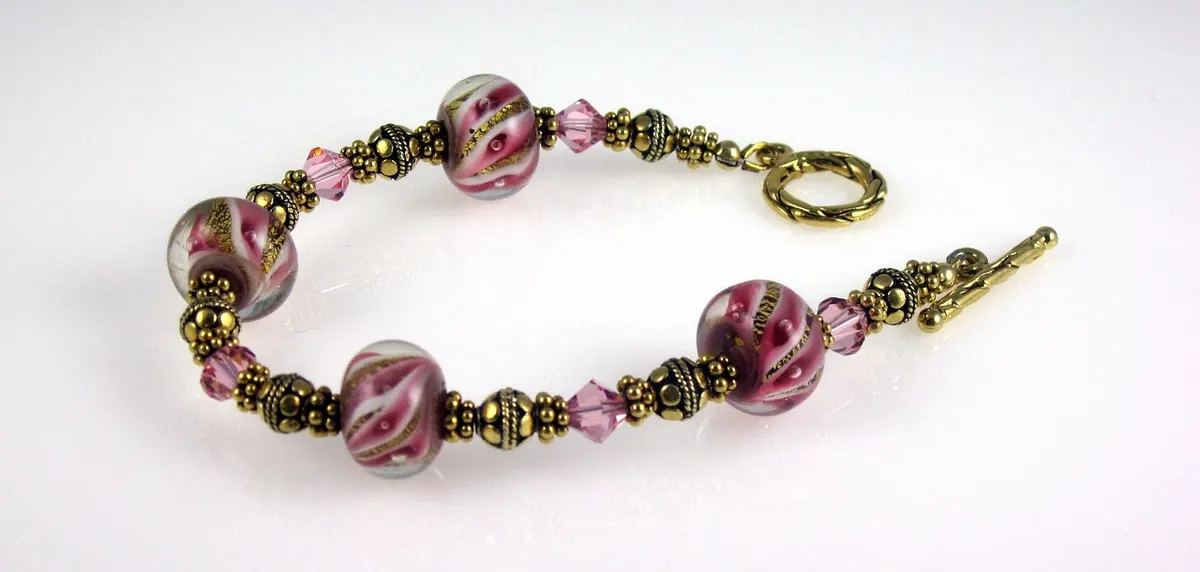
Beaded gemstone bracelets work differently. They are composed of many beads—often somewhere between 6mm and 10mm—strung in a repeating, graduated, or mixed pattern. The purpose is visual: color, texture, shine. A strand of rose quartz, a mix of amethyst and clear quartz, or a matte black onyx bracelet changes the look of a plain white shirt. It does not need to mean anything. It needs to work with your wardrobe and feel good on your wrist.
- Choose a birthstone bracelet when the stone has to be specific: a birthday, a new baby, a graduation, an anniversary, or a memorial piece.
- Choose a beaded gemstone bracelet when you want color, texture, or a piece to stack with a watch and other bracelets.
- Choose both when you want one meaningful piece for occasions and one easy accent for daily wear.
Durability: Look at the Stringing Before the Stone
Many shoppers focus on the gemstone and ignore the construction. Construction decides whether a bracelet survives daily wear. Birthstone bracelets often use a clasp and chain or a fine cord; beaded bracelets often use elastic. Elastic is convenient, especially for stacking, but it stretches, collects lotion, and weakens with heat and water. Any elastic bracelet will eventually need restringing; how soon depends on how often you wear it and how you treat it. A clasp bracelet can be more secure for a heavier focal stone, but only if the clasp is well made and the chain is strong enough for the weight. If the design includes metal spacers, jump rings, or a lobster clasp, check that the metal is smooth and the soldering is tidy; rough edges wear through cord and skin.
Stone type matters too. Amethyst, citrine, and clear quartz are relatively hard and tolerate daily wear well. Softer or porous stones—opal, pearl, turquoise, malachite—need more care. Keep them away from perfume, hairspray, chlorine, and prolonged water. Birthstone bracelets often feature these softer stones, so a birthstone piece may be more of a “put it on for the event” bracelet than a “never take it off” bracelet. That does not make it less wearable. It simply means the care routine should match the stone, not the occasion.
Elastic, Clasp, or Cord?
The closure is where most bracelets succeed or fail. Elastic is the easiest to put on and the most common choice for beaded strands, but not all elastic is equal. Look for double-strung elastic or a knotted and sealed join, and ask whether the bracelet can be restringed. Clasp-and-chain designs offer a more adjustable fit and a dressier finish, but a thin chain can snap under a heavy gemstone. Cord and adjustable closures—often using a sliding knot—feel casual and are easy to size at home, though the knot can loosen over time. For a birthstone piece with a single focal stone, a secure clasp is often the better long-term investment. For a stackable beaded piece, elastic or a simple adjustable cord may be perfectly practical.
Buy the construction first, the stone second, and the story third. A meaningful bracelet that breaks in a month stops being meaningful very quickly.
Fit and Comfort: How the Bracelet Wears
Fit matters more with beaded bracelets than many shoppers expect. A strand that is too tight will press into the wrist and strain the elastic; one that is too loose will slide over the hand and catch on sleeves. A birthstone bracelet on a chain can usually be adjusted with an extender, but a beaded bracelet has to be sized more deliberately. Measure your wrist snugly with a soft tape, then add roughly half an inch for a comfortable fit. If you prefer a looser stack, add three-quarters of an inch. For a gift, check whether the bracelet has an adjustable closure or whether the seller offers resizing.
Getting the Size Right
- Measure the wrist just below the wrist bone with a soft tape or a strip of paper.
- Add about 0.5 inches for a standard fit, or 0.75 inches for a relaxed fit.
- Account for bead size: larger beads need a little more room than tiny rounds.
- Ask about restringing or resizing before you buy, especially for elastic bracelets.
Comfort also depends on weight. A row of 10mm gemstone beads can feel substantial, while a delicate birthstone bracelet with a single stone may disappear on the wrist. If you type all day, sleep in your jewelry, or wear a watch on the same wrist, a lighter design is usually easier to live with. If you want a bracelet to be the main event, a heavier beaded strand can hold its own.
Care, Styling, and Long-Term Value
Both bracelet types reward a little maintenance. Wipe gemstones with a soft, dry cloth after wear, and store them away from direct sunlight and heat. Elastic should be kept away from prolonged water and lotion; even if the beads are water-safe, the stringing may not be. Metal components should be dried promptly to reduce tarnish. For softer birthstones such as opal, pearl, and turquoise, put the bracelet on last—after perfume and hairspray—and take it off first at night. A simple rule is to treat the bracelet according to its most delicate component, whether that is the stone, the cord, or the clasp.
Styling Notes
Beaded gemstone bracelets are natural stackers. A rose quartz strand, a clear quartz strand, and a thin metal bangle can be worn together without competing. Birthstone bracelets are often better as a solo piece or paired with a watch, because the focal stone is the point. If you want to combine both, let one be the anchor and the other be the accent: a birthstone bracelet with a single stone, plus a beaded bracelet in a related color, reads intentional rather than busy. For everyday wear, choose either a birthstone bracelet with a secure clasp or a beaded bracelet with durable stringing—and save the more delicate piece for occasions.
Cost and Value
Price does not always follow meaning. A beaded bracelet may cost more than a simple birthstone piece because it uses more material, or less because the beads are smaller and more common. A birthstone bracelet may carry a premium for the setting, the brand, or the convenience of a curated gift. Look at the stone quality, the stringing method, the metal findings, and the return policy. A well-made elastic bracelet with clean knots and good elastic can outlast a poorly made clasp bracelet. A modest birthstone design with a strong chain can become the piece you reach for every month. The best value is the bracelet whose construction matches the way you actually wear jewelry.
In the end, the choice is less about crystal versus gemstone and more about intent. If the bracelet needs to hold a date, a person, or a memory, start with the birthstone and then insist on good construction. If it needs to finish an outfit and move easily from desk to dinner, start with a beaded strand that fits well and feels comfortable. Either way, buy for the life you will give it—not just the moment you open the box.
Photo: peteyp8 / Pixabay