
Two crystal necklaces in a lined box, or one bracelet you'd happily wear every day for years. Most holiday shoppers meet that choice at some point in December, with the same budget and two very different outcomes. Gift sets are built to look generous on the table. Single pieces are built to last in a jewelry box. Neither is automatically the better buy. It depends on who's receiving it, what they already own, and how much of your money you'd rather see go into the stone instead of the packaging. Here is the honest comparison, plus a way to decide in ten minutes.
What a Gift Set Really Contains
A set is a bundle: usually a necklace, a pair of earrings and sometimes a bracelet, all in the same stone family and finish. Your money goes three ways — into the jewelry, into the extra clasps, chains and settings, and into the box that holds it all.
That isn't a flaw. Bundles genuinely spread the budget across more wrapped boxes, which matters when you're buying for a colleague, a cousin or a friend's daughter and would rather not hand over one small pouch. The trade-off tends to show up in the components: smaller stones, thinner settings, plated metal instead of sterling, or an elastic cord where a proper clasp would cost more.
Do the arithmetic before you commit. Look at each piece on its own and ask what you'd pay for it separately. A $70 set with a small pendant, a pair of studs and a beaded bracelet may break down to roughly $30, $25 and $15. If the total lands close to the set price, you're mostly buying convenience and packaging — a perfectly good reason, as long as you know that's what you're doing. If the set undercuts the sum by a wide margin, read the details instead of assuming a bargain. Something in the bundle is usually lighter than it looks in the photograph.
Check the specifics before checkout:
- Metal: sterling silver, gold fill or plated brass. Plated pieces can be fine, but they wear faster at clasps and ear wires.
- Stone size: look for millimeter measurements, not just “large” or “statement.”
- Closures: a lobster clasp and proper chain usually outlast elastic or a simple hook.
- Ear wires: sensitive ears need sterling or gold fill, and not every set offers it.
A set can still win on value if the recipient wants variety, wears jewelry casually and likes matching pieces. The point is to compare what's actually inside the box, not just how full the box looks.
Where a Single Piece Earns Its Keep
One standout piece — a chunky amethyst pendant, a labradorite ring, a bracelet you'd never buy yourself — puts the whole budget into a single object. That concentration buys things a set rarely offers: a larger stone, a heavier setting, a clasp that survives February, and the small design decisions that make jewelry feel chosen rather than assembled.
The real measure is cost per wear. A three-piece set worn twice sits in a drawer, and the price per outing never improves. Put the same money into one pendant worn three times a week for two years and the math changes completely. A $90 bracelet worn twice a week for a year costs less than $1 per wear. A $90 set worn once costs $90 per outing, no matter how pretty the box was.
Single pieces also suit people who already have a routine. If your recipient rotates the same six small pendants and studs, one bold piece is an addition. A set is often a fourth version of what they already own — pleasant, but not memorable.
There is a risk, though. One piece has to be right: the right length, the right size, the right tone against their skin. A classic shape and an adjustable chain reduce that risk. A very personal statement piece does not. If you're guessing, a simple pendant or a bracelet with an extender is safer than a ring in an unknown size.
Presentation: What the Box Is Worth
The set's home advantage
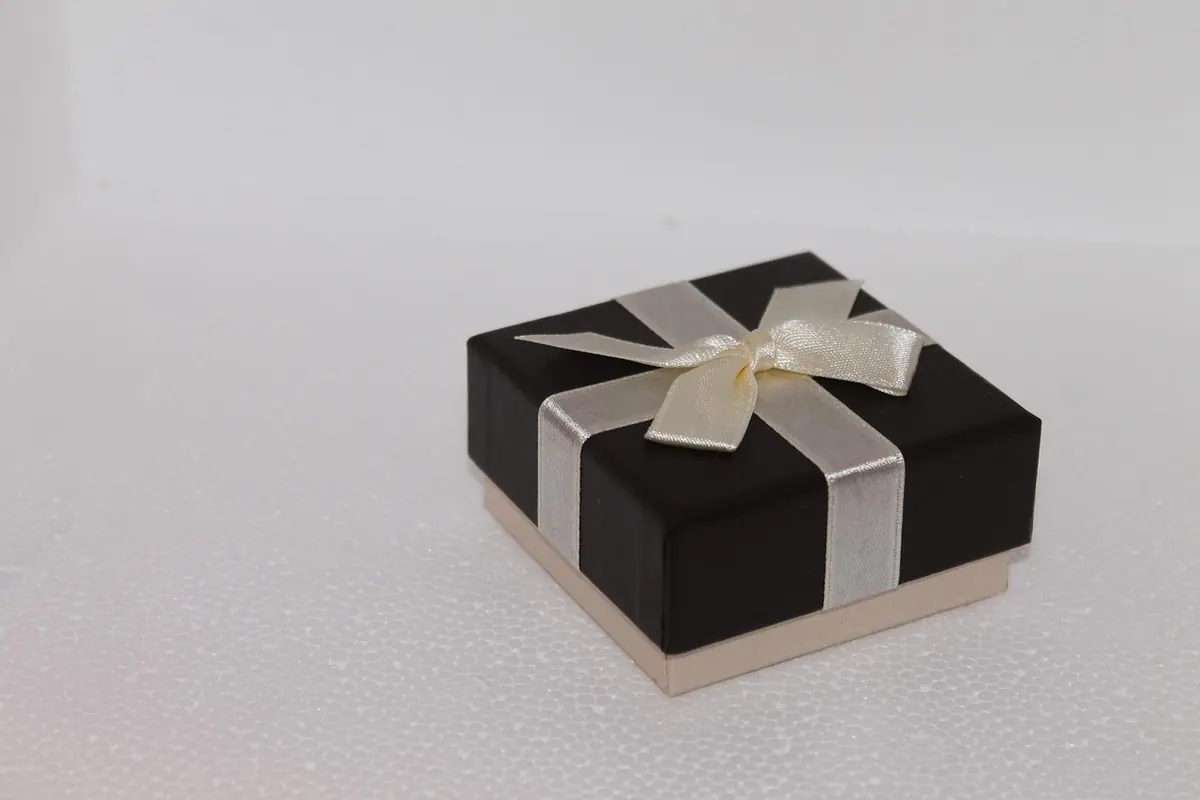
Sets arrive gift-ready. Slots, tissue, a printed card, sometimes a ribbon. If the gift will be opened in front of family or shipped straight to the recipient, that counts for more than it sounds.
Making a single piece feel like an event
A loose pendant in a plain mailer is a weak reveal. Fix it cheaply: ask for gift wrapping, tuck the piece into a fabric pouch, or add a handwritten line about why you chose that stone. Ten minutes and a card turn a small item into a moment.
Presentation has a budget too, and in a set that cost is baked into the price. None of it is waste — a gift that looks considered on the table does part of the emotional work. Just decide on purpose. If you'd rather the money went into a heavier chain, a single piece lets you do exactly that; if you want a proper unboxing without lifting a finger, the set delivers it.
Flexibility, Fit and the Risk of the Wrong Piece
Sets are fixed. Chain length, earring style, ring size — you take whatever is in the box. That's fine for a necklace and earrings, less fine if the set includes a ring or a bracelet sized for an average wrist. It also means you can't adjust for taste: a recipient who only wears gold-tone metal won't suddenly start wearing silver because it came with matching studs.
Single pieces are more flexible in one direction: you can choose the right size, the right metal and the right length. They are less flexible in another: if you get it wrong, there's no second or third item to soften the miss. A set gives you three chances to please; a single piece gives you one strong shot.
Think about the person's habits before you choose. A teenager experimenting with crystals may love a set of three pieces to mix and match. A colleague who wears the same two rings daily probably needs one considered addition, not a matching trio. Someone without pierced ears is a poor candidate for an earring-heavy set. Someone who already owns a dozen delicate necklaces may never reach for another small pendant.
When a Gift Set Is the Smarter Buy
A set makes sense in more situations than jewelry purists admit. It is often the better choice when:
- You need multiple boxes on a budget. One set can feel like three gifts, especially for a gift exchange or a family grab bag.
- You don't know the recipient's taste well. Matching pieces in a neutral stone are forgiving, and there's more than one item to like.
- You're shipping directly. Gift-ready packaging saves you a wrapping step and arrives looking intentional.
- The recipient is new to crystal jewelry. A set lets them try a pendant, studs and a bracelet without committing to a bold statement.
- The components check out. If the metal is sterling, the stones are a decent size and the clasps are proper, a $60 set can be genuinely good value.
The key is not to buy a set because it looks like more. Buy it because more is what this recipient actually wants.
The Ten-Minute Decision
If you're still torn, run this quick sequence before you buy:
- Set a hard budget. Decide the number before you browse, and include wrapping or shipping in it.
- Name the recipient's habits. Daily wearer, occasional wearer or almost never? That answer points toward a single piece or a set.
- Compare like with like. Price the set's components separately, or compare the single piece's stone size and metal to what the set offers.
- Estimate cost per wear. A rough guess is enough. One piece worn often usually beats three pieces worn rarely.
- Check the return policy. Holiday jewelry is often final sale, especially on sets. Know before you wrap.
Buy the set when you need presentation, variety and a safe choice. Buy the single piece when you know the person, trust the materials and want the budget to land in one lasting object.
Neither choice is the “cheap” one or the “serious” one. A set can be thoughtful and well made. A single piece can be an overpriced mistake if the size or style is wrong. The useful question is simpler: which one will this person actually wear, and which one puts your money where they'll notice it? Answer that, and the budget comparison settles itself.
Photo: kalhh / Pixabay